Wednesday, August 12, 2020

Worry and Time

                       Amazon.com: dudkaair Salvador DalĂ­ - The Persistence of Memory ...


           When I was a child learning my Catechism and the specs for mortal and venial sins, I developed an inordinately elaborate system of rationalizing whether a particular action or thought guaranteed a quick purgatorial sautĂ© of my sorry butt or hell’s bonfires. For example, was not inviting Colleen to come play to a party because I was so jealous of her curly hair that I wanted to cut it off—mortal or venial?  Certainly a sin of omission.  Criterion 1: Was it intrinsically evil?  No, it wasn’t adultery (I wasn’t sure at the time what that was, only that adults probably did it), or anything having to do with the parts between my legs. But wasn’t it a kind of jealousy killing?  And then, if I stole her pink bunny barrette from her desk, wasn’t that (2) knowing I was doing something evil? And (3) Giving my full consent?

            Of course, that was all just silly childish exploration of how to manage feelings, but I would torture myself for having the very thoughts.  I would go to confession and veritably interrogate the priest on every point?  What makes it not mortal?  And why can’t I stop feeling jealous?  And when will this stop?  I spent so much time in the confessional rationalizing, that I was probably committing the sin of gluttony—impinging on others’ confession time, not knowing whether they should leave or pee their pants.  And then that would be my fault if they died crossing the street to the bathroom without having had their confession.  I was given the designation of “scrupulous,” and was actually proud that I was practicing in the tradition of self-flagellating monks and nuns.

And vows.  That was even worse.  If I promised God that I would become a nun if He let me heal from my bronchitis, was I then, when I could breathe easy again, stuck?

The point is, I established habits of compulsive self-torture, rationalization, and worry that are now coming out to play during the COVID-19 crisis. Worry is a function of time—What’s going to happen? Will I go to hell in the afterlife? What if? What if? What if?  Because COVID-19 can be asymptomatic, because it can take fourteen days for the virus to present, because the recovery can be lengthy and unsuccessful, it’s a recipe for worry.  If there is a crisis, worry is understandable, but not as an everyday habit.  Look at the cover image: Worry makes of our time a wasteland of distorted Dali clocks, as in the reproduction of his work above, The Persistence of Memory.  We might rename it "The Insistence of the Future." Or, perhaps, "The Resistence of the Future"—trying to have it now.

I have a buddy in compulsive worry and need for reassurance.  Any number of times during the day and in our insomniac wee hours, we Facebook message. Here’s a scenario. It doesn’t matter which of us are One or Two, we do this back and forth:

One: “Do you think it was all right that a woman passed by me in the hall without a mask?

Two: “You had a double mask on, right?”

One: “Yes, but what if the aerosol went through one of the masks?”

Two: “How far away was she?”

One: “It on the other side of the hall.”

Two: “Must have been five feet.”

One: “I don’t know.”

Two: “Let me go measure my hall…It’s at least 6 feet.”

One: “But she was yelling into her phone.  Doesn’t that count like a sneeze?”

Two: “You’re okay.  It was only a few seconds.”

One: “But what if…..”

Two: “You’re okay….

“One: “But…”

            Both my buddy and I are, you guessed it, scrupulous about our physical self-protection.  What we don’t have control over is our own self-invasive and mutually contagious habits of self-torture, rationalization, and need for constant reassurance. The most frequent responses in our threads to each other are “You’re okay. You’re okay.”  But we can’t seem to absorb the reassurance or to reassure ourselves. Every time one of forays outside our house to take a walk, or get a blood test, or a loved one gets a haircut on a tennis course in hot sun, we’re off and running the terror tapes—(c)hecking out the criteria, as I did for mortal/venial sins, and guessing and second-guessing, and rationalizing.  We are each other’s confessors, but there seems to be no absolution.  And the afterlife, in this case, after COVID-19 dies out, is what-iffy.

            The manufacturers of the clock above squared off the distorted clocks and made of the image a functional clock.  Similarly, I need to set boundaries on my future-thrusting addiction to worry. What I need to recover for myself is the capacity to live in the moment, and not compulsively worry—not to project into the future.  What I need to recover for myself is the self-soothing that healthy children develop early on.  The mind has a way of hijacking us into an unknowable future.  These times are more fraught with present dangers, but the future is always unknowable—unk-NOW-able.  The NOW is that setting of boundaries that the squared-off clock represents.

My worry buddy and I love each other dearly and are in for the long-haul, but it has occurred to me that, beyond the first reassurance, we are just enabling each other in our giving our powers away to someone else, as I did to my confessors.  We are in an endless loop of looking for reassurance, giving it, looking for it again, as if it never happened.  Then we go to others and start the loop again.  As we say in support groups, “Say it once, it’s advice.  Twice, and it’s control.”  That’s true for reassurance, “Say it once, and it’s support. Twice, and it’s control—enabling each other’s addiction to worry.”

Here’s the story of “The Fight of the Two Wolves:”

An old Cherokee is teaching his grandson about life:

“A fight is going on inside me,” he said to the boy.

“It is a terrible fight and it is between two wolves. One is evil–he is anger, envy, sorrow, regret, greed, arrogance, self-pity, guilt, resentment, inferiority, lies, false pride, superiority, and ego.”

He continued, “The other is good – he is joy, peace, love, hope, serenity, humility, kindness, benevolence, empathy, generosity, truth, compassion, and faith. The same fight is going on inside you–and inside every other person, too.”

The grandson thought about it for a minute and then asked his grandfather: “Which wolf will win?”

The old Cherokee simply replied, “The one you feed.”

I just went to check our Facebook thread, as I do throughout the day.  I love being connected to her, especially during this time.  She had been worried about a blood draw and the results she would only know in a week:

Her: I gotta just get to Saturday

Me: And also get to this moment.  What’s good right now?

Her: That I don’t know anything to worry about

            Me: Oh! That’s Sweet!

            Then she fell back:

            Her: I’m on high alert. I feel faint—so anxious

            Me: Feed the other wolf.

Works Cited:

Cover Art:


The Fight of Two Wolves Within You. https://deanyeong.com/fight-two-wolves-inside/

Friday, August 7, 2020

Doomsday, Demo Day: Nature Always Wins

Chip and Joanna Gaines Fined $40,000 for Breaking This Safety Rule ...

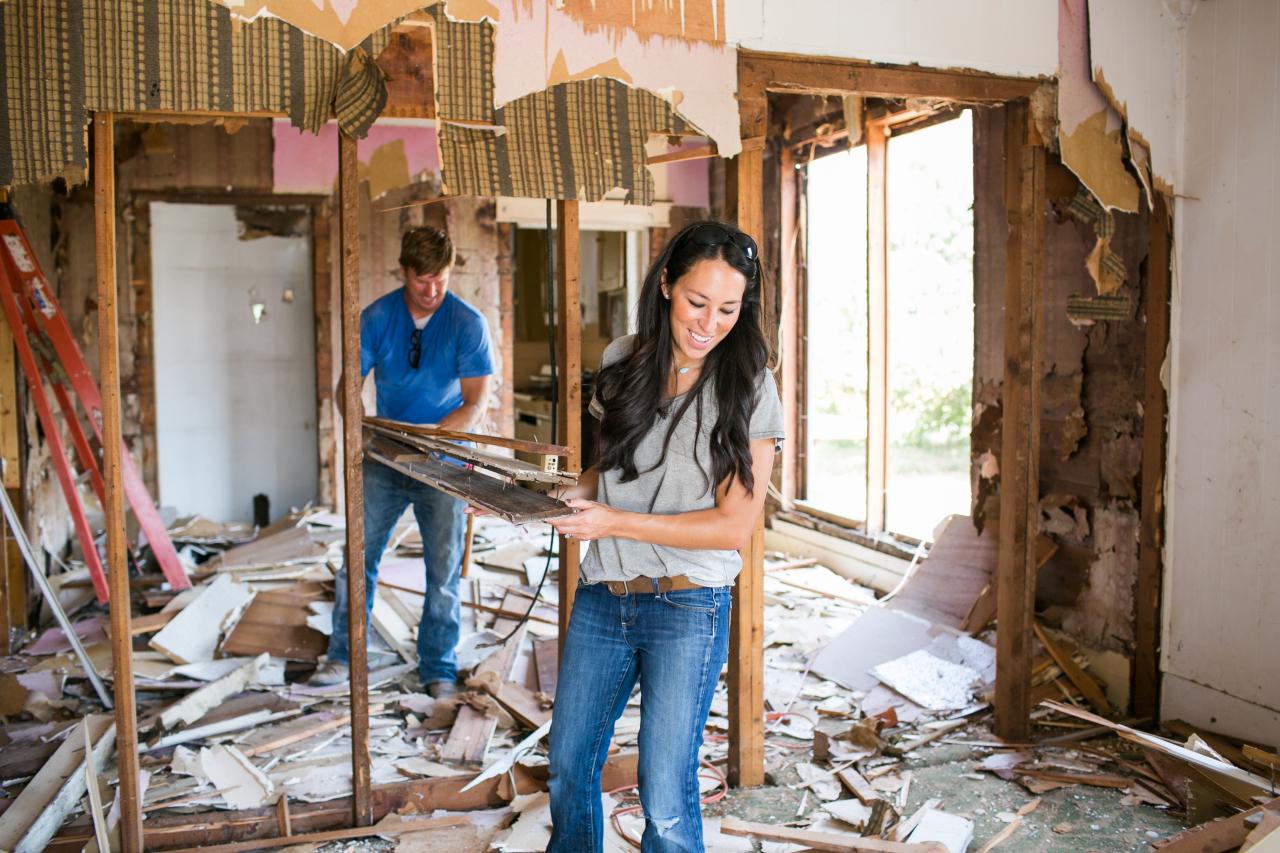
             Demo Day, Chip Gaines crows, flexing his biceps, brandishing his mallet. Joanna, his wife, giggles as he throws himself crashing through drywall, rips down kitchen cabinets, saws through beams.  Crowbars, jackhammers, high-pressure hoses, muscle. Joanna calls it “getting back to the roots.”  It is breaking down walls, exposing toxic mold and termite-ridden beams.  We're tuned into another episode of HGTV’s Fixer Upper, a program devoted to turning moldering houses into homes with chi. In the next hour, we will watch a crew transform a ramshackle hut into a charming cottage; last week, a moldering Victorian was reborn as a lively inn.

            Like a condemned house, the earth is riddled with disease: air, water, and soil pollution; the amputation of beneficial botanical and zoological species; chemically poisoned fields; the unbalancing of natural processes; global warming and the gout of swelling seas. 

In their study of generational patterns most famously described in The Fourth Turning: An American Prophecy, William Strauss and Neil Howe argue that human history runs in cycles of roughly eighty years: The High, The Awakening, The Unraveling, The Crisis.  In 1997, they predicted that 2020 would bring us to The Crisis: someone of the boomer generation would rise to power and precipitate disasters that millennials would have to redress.  Steve Bannon distorted the generational patterns described in The Fourth Turning to strategize just such a fascistic (down)turn in America.  That included the elimination of Environmental Protection measures and the support of industries destructive of global ecology—all in the name of greed and political power.  We are on a trajectory to Doomsday. 

And Nature has declared Demo Day.  She is roaring in thunder, tornadoes, the racket of hailstorms. Flexing her muscles with hurricanes, firestorms, cyclones. She rips up houses, cars, roads, power plants, and dams. Reduces winters that check algae so lakes will sicken. Brings on droughts and floods.  Power outs?  Yes, Power outs. Ebola, SARS, MRSA? Hm. Humans kept those in check through responsible government. But moldy wallpaper, flaking asbestos, and rotten foundations have to be eliminated to make a home. So, too, with humans. Let those befuddled by artificially processed sugars, drugs, alcohol, food; screens, amps, gadgets, backfiring trucks—suffer the consequences. Let them elect narcissistic, brain-damaged, fascistic heads of state, too distracted with popularity to act for the common good. These leaders are the high-pressure hoses, Nature’s jacking hammers yammering, so to speak. Well done: the lemmings are meeting in Petri dishes—megachurches, rallies, parades.

And now, the fever: COVID-19—a burning out of the most invasive and destructive species on earth.  Let these humans destroy themselves and each other.  Let’s return to solid foundations, the seasoned beams, ancient rocks.  Sadly, some antique mirrors will break, some houses will succumb to the wrecker’s ball. Innocent bystanders? Who among us is not complicitous?

Go to Your Room, Nature says, Build your ark.  I’m cleaning up.


Works Cited:

Strauss, William, and Neil Howe.  The Fourth Turning: An American Prophecy—What the
Cycles of History Tell Us About America’s Next Rendezvous with Destiny. New York:
Three Rivers P, 1997.

Sunday, August 2, 2020

Back to the Sixties: COVID and the Flower Child

                                      Image may contain: Susanna Rich, smiling, standing and shoes


No bra, hairy legs and pits, same tie-dyed T-shirt and gypsy skirt for days.  The guitar on my lap, writing poetry in a spiral-bound notebook with a green-barreled pen with a plastic daisy at the top.  This was me in the early seventies (which is when The Sixties fully, so to speak, flowered). This is me, now.


The Sixties were a time of rebellion—against capitalist over-consumption, bureaucrazies, gender restrictions, prudish sexuality.  Birth control pills and the Baby Boom, Marches for Civil Rights and against the Viet Nam War, Women’s Liberation, Black Power, Flower Power, Equal Rights, Earth Day, Give Peace a Chance. While Woodstock rocked the music scene, the Hong Kong Flu killed a million people worldwide, a hundred thousand in the United States.  Only the faces change. During the COVID-19 pandemic, we are marching, still; still protesting to save our planet.

With COVID sending us to our rooms, we have time and the need to review, again, all that the Sixties brought to consciousness.  Technology might have revolutionized our lives, but we are still all, as we used to sing, children of the universe.  Nature has reasserted itself.  As Chip and Joanna would call it, it’s “demo day.”

In the five months since we’ve been sheltering in place with only online deliveries for resources and strictly necessary health care visits, I have reclaimed many of the Hippie habits that sustained and comforted me back then.

I wear comfortable tee-shirts that function equally for yoga, gardening, sleeping, and hanging-out.  Speaking of which, I no longer sling myself up with bras.  Remember bra burnings? Those underwires, padding, pointy cups, and straps are meant to push our breasts up and out as sexual come-ons, like the trays cigarette girls used to carry.  Tight bras are one of the most pervasive causes of breast cancer—read Dressed to Kill.

I’m letting down my hair—head to toes.  For the first time in my life, I notice how much longer my knee hair is than the rest of my legs.  Is this too gross?  A reminder that we are, after all, creatures, like the animals, of nature.  I’ll focus another post on hair during sanctuary. Oh, and let’s admit it, much fewer showers.

And for fresh greens, I grow alfalfa sprouts and those very crazy mung beans that grow so fast that they push off the lid of the sprouting tray.  I ferment our own yogurt, and distribute them into portions in reusable glass ball jars.  We have a tray of microgreens growing by the kitchen window, and the fall crop of kale seedlings sprouting under a grow bulb.  For fresh salad, we have a hydroponic garden inside.

Yoga, meditation, drumming.  Bare feet. Bare face. Ravi Shankar on the turntable. Who knows?  Shall I tie-dye some sheets.  How about melting all the beeswax candle stubs I’ve been saving to make sand candles?

Old and New Hippies, how are you accessing your Inner Flower Child these days?

Works Cited:

Grismaijer, Soma, and Sydney Ross SingerDressed to Kill. Garden City: Square One, 2017.

Monday, July 27, 2020

Running to Doctors: Hypochondria and Self-Care


            My Grandmother Munchy wanted to be a doctor, but during a cadaver dissection in anatomy class, fluid splurted onto her face.  She had entered medical school in the wake of losing both her parents to The Spanish Flu epidemic. She left school to become a wife and mother—safer and more acceptable for a woman in Hungary, in 1922.

            When I was four, my immigrant father and mother divorced in New Jersey, and Munchy became my primary caregiver—feeding me raw eggs for breakfast, teaching me my piano scales, walking me to St. Nick’s grammar school, sleeping next to me in the big bed we shared.  And I became her medical subject and experiment—for new vitamins, for Vick’s VapoRub, for candlings of my belly.  She hovered over me—saved and terrified me. If not suffering from a full-blown case of it, she was certainly (and it’s nominally ironic), someone on the verge of Munchausen Syndrome by Proxy—garnering attention for her codependent martyrdom to other’s illnesses. The two lessons I learned were these:  (1) I can’t take care of myself; (2) Love = Doctoring.

I imprinted on my beloved Munchy, and keep her close by having epic episodes of hypochondria.  My most frequent nightmare is that I’m doomed because I didn’t take some medicine, and I can’t remember what is was. Yes, I am more proactive about taking care of myself—but my medical files at the offices I frequent are entirely too bulky for a healthy person.

            The COVID-19 crisis promised me a full efflorescence of my fear of illness.  But this time, I was more terrified of leaving the house for a doctor’s office, so I didn’t do my usual Stations of Running to the Doctors.  I recovered some of my own power for self-healing.

            My turning point was a severe upper right toothache.  It’s one thing to go to a doctor for a tetanus shot administered in the parking lot by a nurse in a hazmat suit, quite another to have someone digging in my mouth.  I was NOT going to the dentist.  I unearthed our ancient Waterpik Waterflosser and Sonicare Toothbrush and put them into service. I tested the tooth for heat and cold sensitivity. Nothing. I researched and discovered the link to my concurrent sinus discomfort.  Within four days the toothache and sinus discomfort both disappeared so completely that I was crunching almonds on those molars.

            And then there’s the hip injury I incurred using a one-legged scooter after a bunion surgery eight years ago.  Did I follow the physical therapist’s protocol since then?  No.  It was better to “be taken care of” at the office. This time, I was NOT going to the physical therapist to risk COVID infection. I dusted off Bob’s faded recommendation sheets.  And worked his program by myself. Hm.  Feeling better?  Of course.

            In both these cases, I went to my room and mothered myself.  Yes, I have made a first-appointment-of-the-day date for my yearly mammo, although three months later than usual, as breast cancer runs in the family.  And I do get panic attacks about small aches, three too many sneezes.  But I’m my first aide.  I have my thermometer, oximeter, my waterpik, the internet.  As I reflect on the idea of Nature telling us to “Go to Your Room,” I realize how much our medical/pill-popping/insurance-glutted/advertising capitalism wants us to rack up appointments to support the economy. Our courageous health care workers are out there saving lives that are in real danger.  I’m doing my part by taking care of my own daily needs.

            I chose an old photograph of a windswept tulip for this post, because in one Gestalt, it reminds me of a hitch-hiker, waiting for someone to pick her up.  Looked at in other ways, it’s a red bird winging (it).